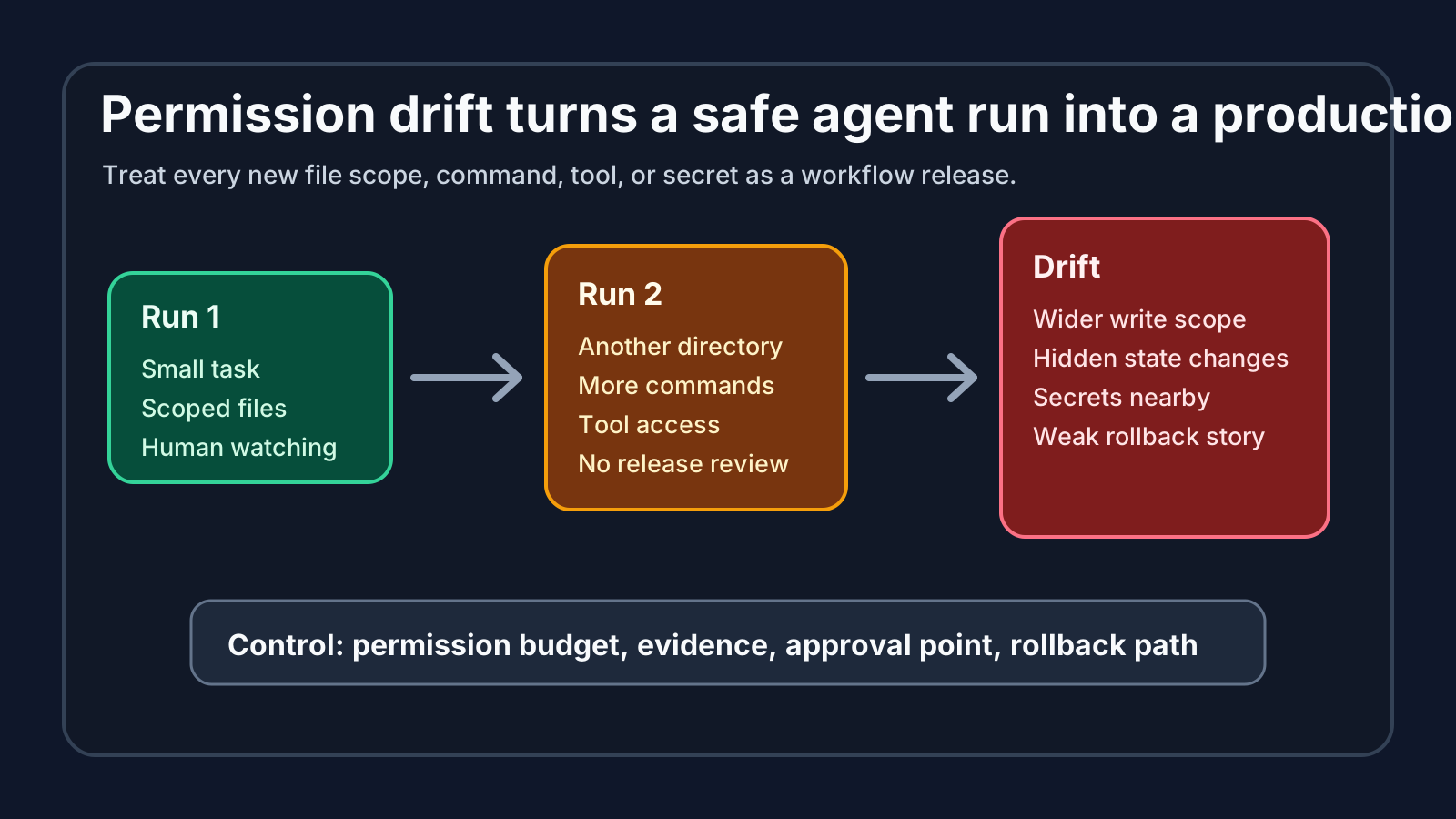
Claude Code permission drift is how safe agent workflows become unsafe
The first Claude Code run usually gets the best discipline.
Small task. Clear repo boundary. Human watching the diff. Limited commands. Maybe no external tools at all. Everyone is still slightly suspicious, which is healthy.
Then the tool helps.
The next run gets a little more room. Claude Code can touch another directory. Then a config file. Then a migration. Then a deployment script. Nobody thinks they are making a major change. They are removing friction from a workflow that seemed to work yesterday.
That is permission drift.
The code may still look good. The tests may still pass. The problem is that the agent’s operating surface changed, and the team did not review that change with the same care as the patch.

This is one of the reasons I wrote Claude Code: Building Production Agents That Actually Scale. The book is about the operating loop around Claude Code: task contracts, scoped files, allowed commands, review packets, evidence, rollback notes, and approval. If your team is also responsible for MCP tools, RAG boundaries, delegated authority, audit, and policy gates, the Enterprise AI Agents in Production bundle connects the coding-agent side with the enterprise security side.
Permission drift starts quietly
Teams rarely widen agent authority in one dramatic step.
It usually happens through small exceptions:
This task needs one extra directory.
This command writes a cache file, but that is probably fine.
This MCP method only reads metadata.
This script needs a token for one test run.
This config file is outside the original scope, but the change is obvious.
Each exception may be reasonable. The trouble starts when the exception becomes the new default without a decision.
A Claude Code workflow that was safe for one task can become unsafe for the next task because the boundary moved. The reviewer may still be reviewing the diff as if the old boundary exists. The agent may now see more state, run more commands, or touch a part of the repository with a different blast radius.
That is where production teams get surprised. The surprise is not that the agent made a mistake. The surprise is that nobody can say when the agent got enough room for the mistake to matter.
Use a permission budget before the run
I like the phrase “permission budget” because it forces the right conversation.
A budget is not infinite. If the task needs more, the team has to say why. If the risk is higher, the review needs to be stronger. If the extra authority is temporary, the workflow should revoke it after the task.
A practical Claude Code permission budget can be short:
Task:
Read scope:
Write scope:
Allowed commands:
Denied commands:
External tools allowed:
Secrets and state boundaries:
Human approval points:
Evidence required after the run:
Rollback path:
Expiry or revocation rule:
The format matters less than the habit. Write the boundary down before Claude Code starts editing. Then make the review packet prove whether the run stayed inside that boundary.
If the agent needs a wider boundary halfway through the task, treat that as a change request. Pause. Write down the new access. Decide whether the current run can continue or whether the task needs a new contract.
That may sound slow. In practice, it saves time because the reviewer is no longer guessing what the agent was allowed to do.
Higher authority needs stronger evidence
Not every Claude Code run needs the same level of control.
A documentation fix in one folder should not carry the same process as a migration touching billing, authentication, deployment, or customer data paths. The mistake is using one vague approval habit for every run.
Tie the evidence to the authority:
Small scoped edit:
- file list
- diff summary
- relevant test or lint result

Wider repo edit:
- task contract
- changed files
- commands run
- failed attempts
- permission changes requested
- rollback note

High risk workflow:
- explicit approval before command execution
- secret and state boundary check
- audit trail
- deployment impact note
- named human owner
The agent can still move quickly. The human gets a better surface to review. That is the point.
I have spent enough time around production support and financial-services controls to distrust vague comfort. A green test result is useful, but it does not prove the agent had the right authority. A clean diff is useful, but it does not prove the run stayed inside the intended box.
Treat permission changes like releases
When a team changes what Claude Code can read, write, execute, or call, the workflow changed.
That does not need a heavy committee. It does need a record:
What changed?
Why does the agent need it?
Which task or workflow does it support?
What is newly possible after this change?
What is still blocked?
Who approved it?
What evidence must the next run return?
When does this access expire?
How do we revoke it?
This is the same discipline enterprise teams need for production agents outside the repo. In Securing Enterprise AI Agents, the same pattern shows up as identity, scoped tool authority, MCP method control, policy gates, audit evidence, and revocation. Claude Code gives engineering teams a smaller place to learn the habit before the enterprise version becomes more expensive.
The book is for teams past the toy phase
If your team is only experimenting with Claude Code on throwaway tasks, a permission budget may feel excessive.
Once Claude Code is working in a real repository, the tradeoff changes. The question is no longer “can the agent help?” It can. The question is whether the team can keep the help inside a boundary that survives review.
Before widening Claude Code access, use the free Claude Code production checklist to define the task boundary, permission budget, evidence requirements, and rollback path.
If you want the full operating loop, buy Claude Code: Building Production Agents That Actually Scale. Kindle readers can get it on Amazon here: Claude Code on Amazon Kindle. Readers who prefer the living edition can use Leanpub.
If the same group owns Claude Code rollout and enterprise agent governance, the Enterprise AI Agents in Production bundle gives you both sides of the control model: reviewable agent delivery and secure agent authority.