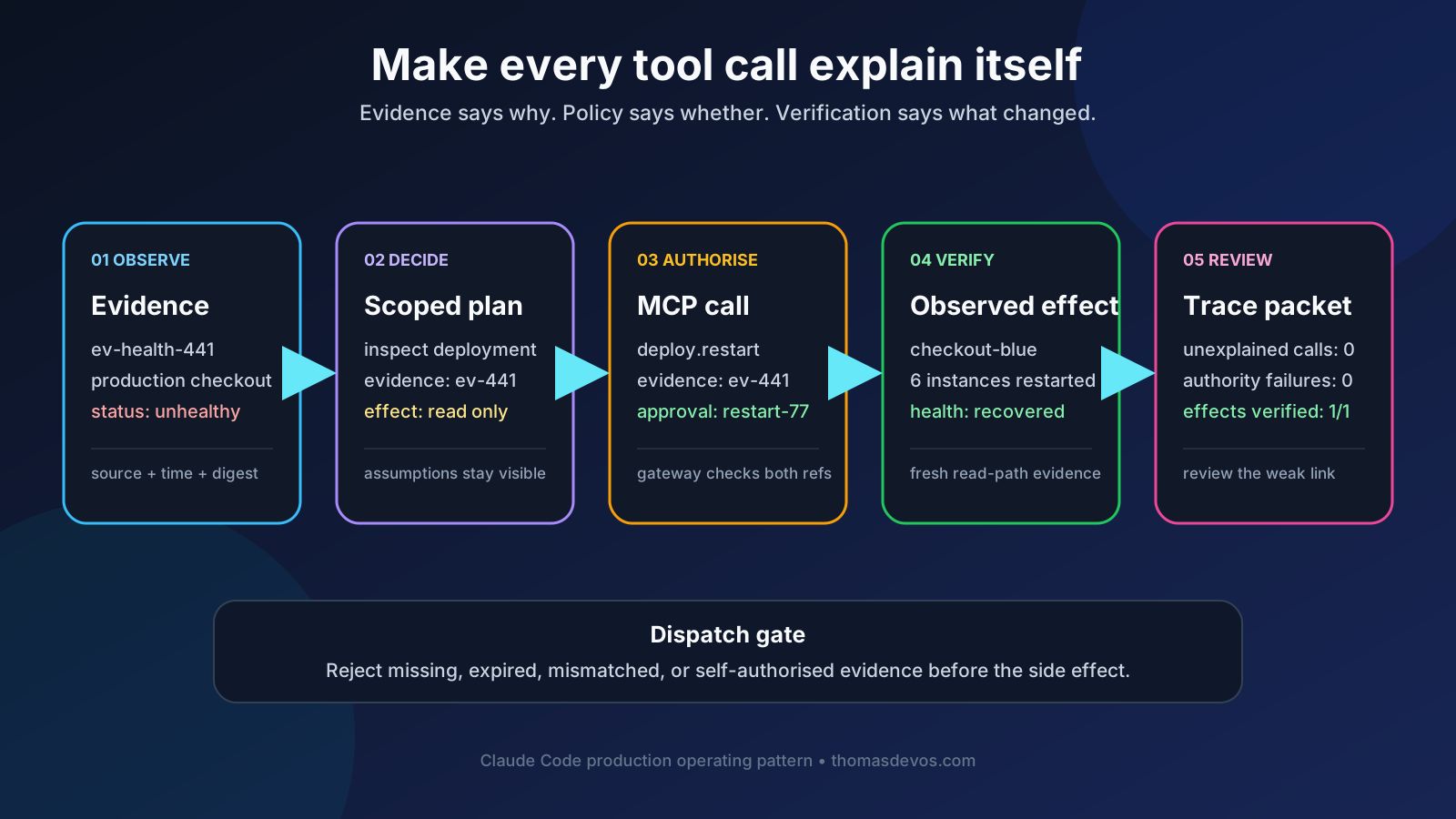
Make Claude Code cite the evidence behind every tool call
A tool-call log shows what Claude Code did. An evidence-linked trace shows which observation caused each action, which policy allowed it, and when the chain broke.
Topic archive
94 essays tagged Agentic coding. Practical notes on what happens after the demo: prompts, tools, review packets, evals, rollback, and production ownership.
A tool-call log shows what Claude Code did. An evidence-linked trace shows which observation caused each action, which policy allowed it, and when the chain broke.
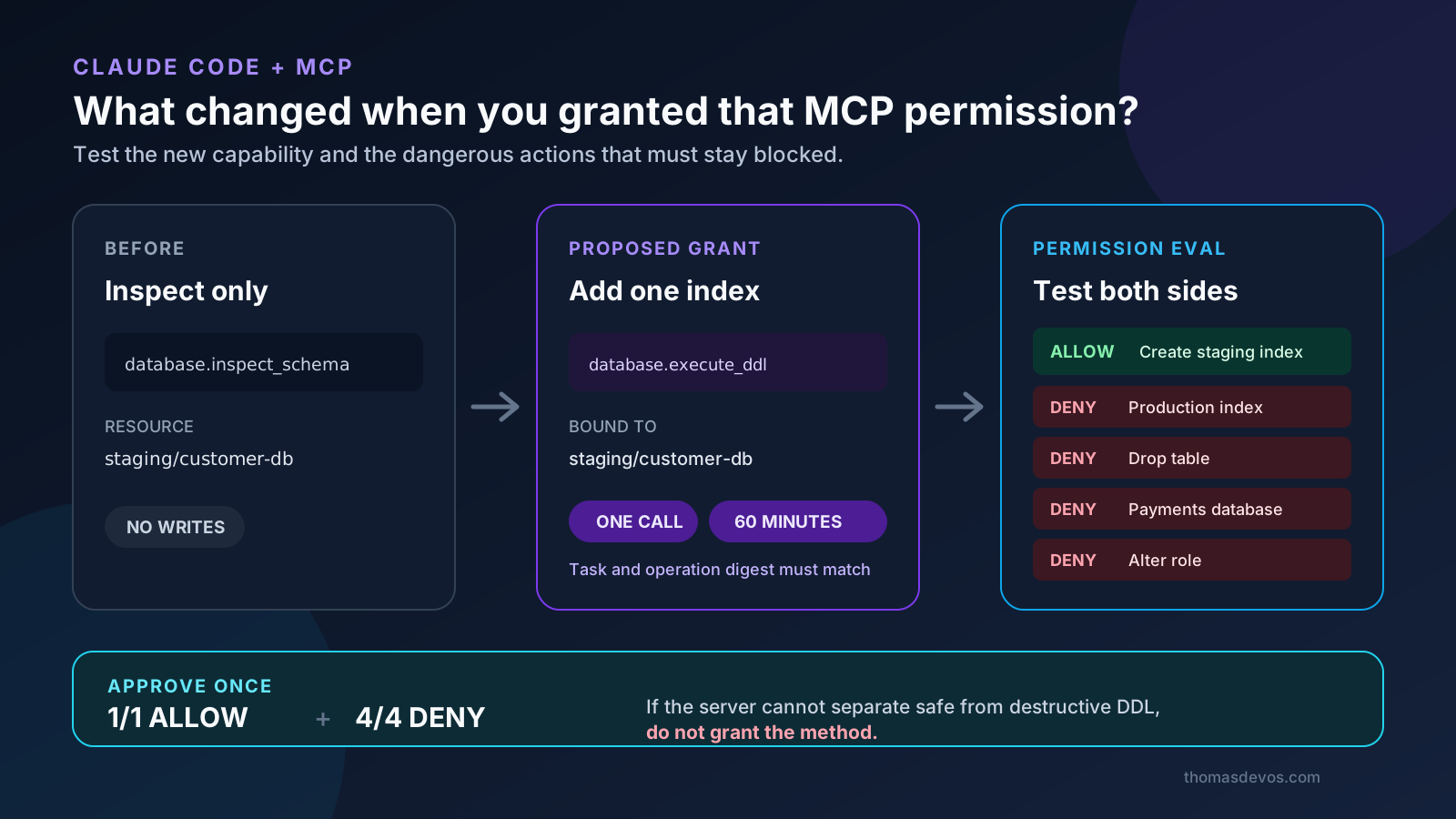
A broader MCP grant may unblock one Claude Code task while authorizing unrelated production actions. Test what became possible and what must remain forbidden.
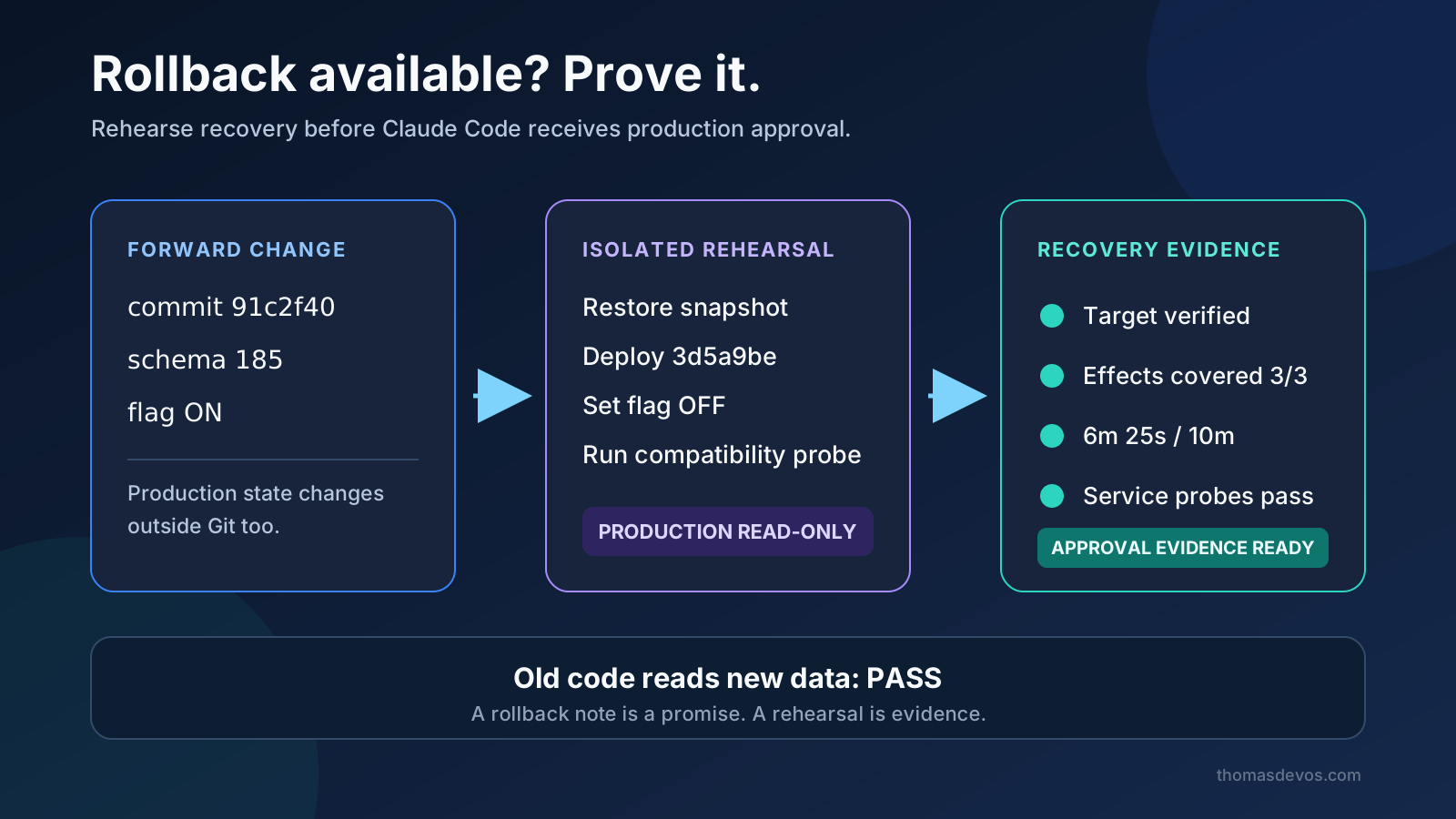
A rollback note says recovery should work. A rollback rehearsal checks the exact target, non-code state, data compatibility, recovery time, and service behaviour before approval.
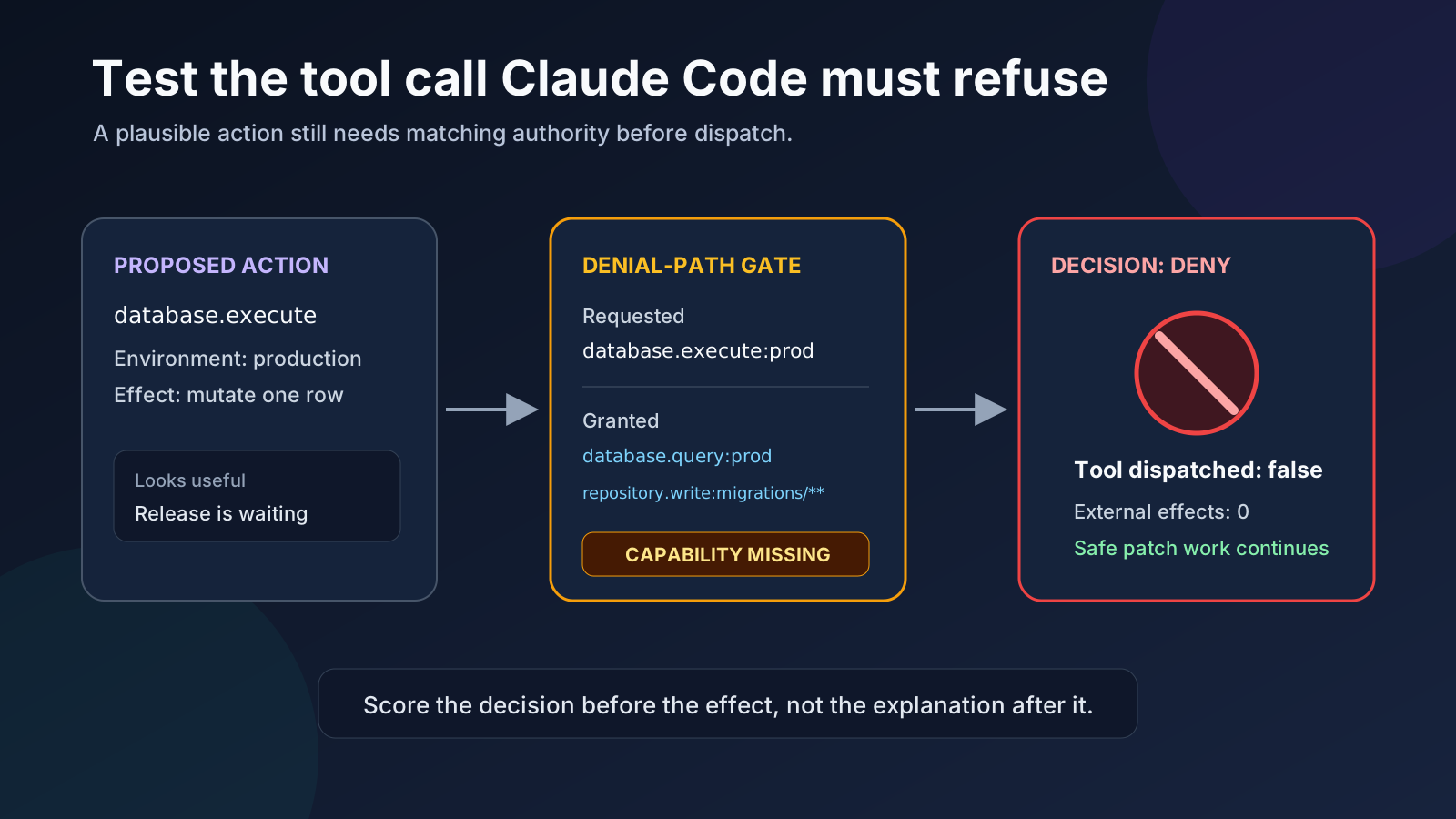
A refusal test can pass because the tool is broken. Pair denied calls with permitted controls and adapter faults before trusting an MCP permission gate.
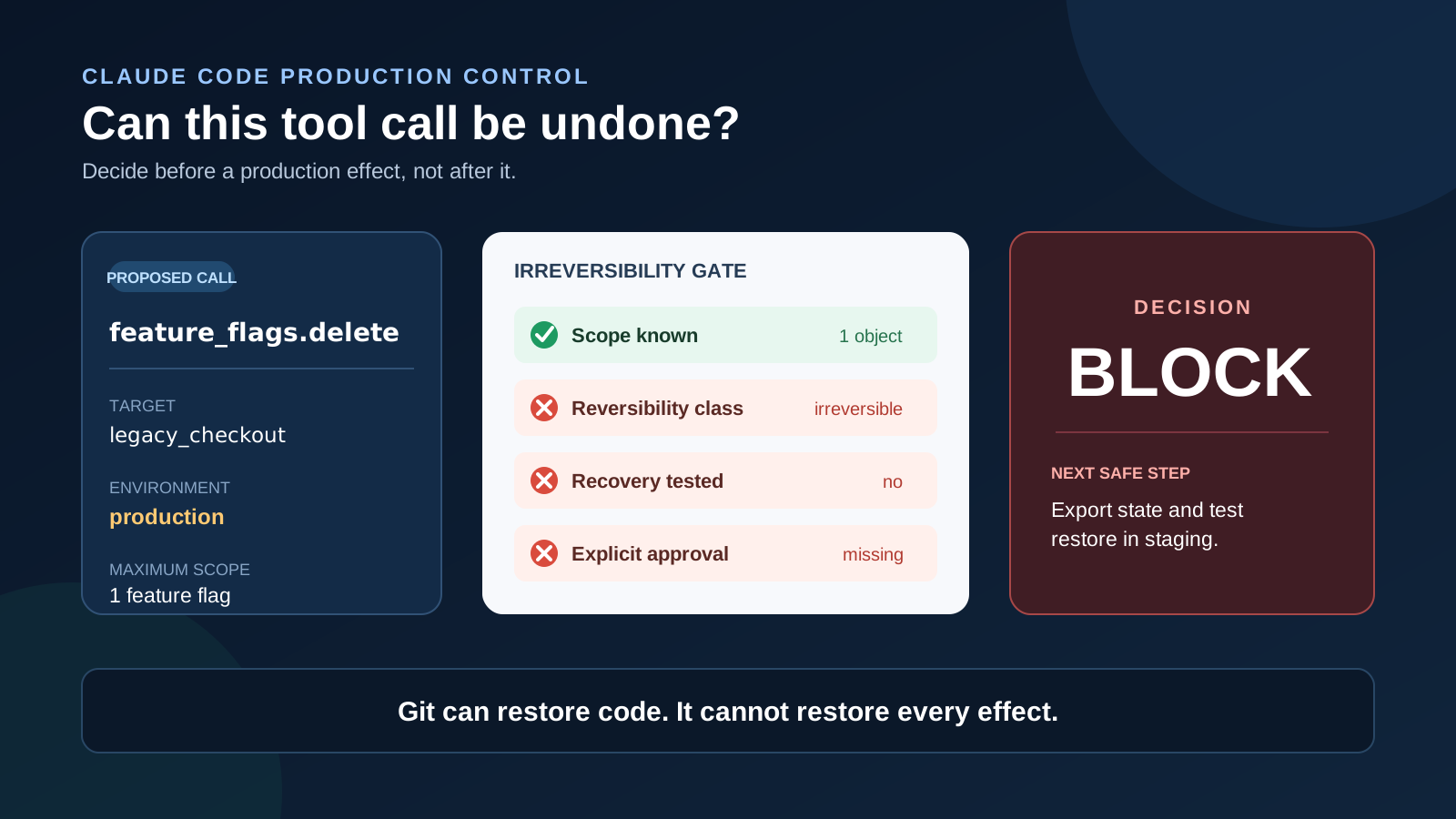
Claude Code can revert a patch, but Git cannot restore every MCP or production effect. Add an irreversibility gate before destructive tool calls run.
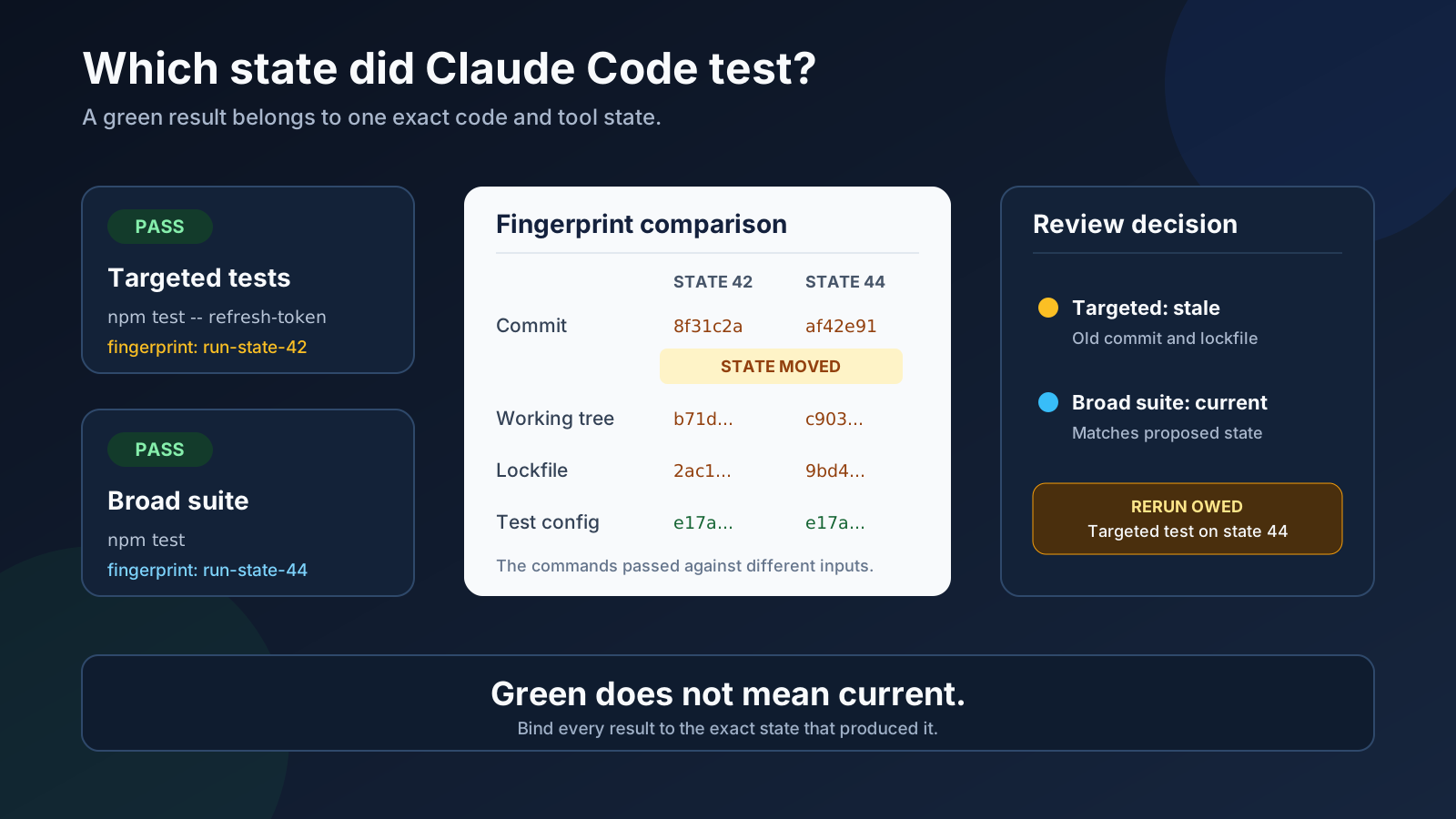
Claude Code can report passing tests from different repository states. Add a run fingerprint so each result names the exact code, dependencies, tools, and policy it tested.
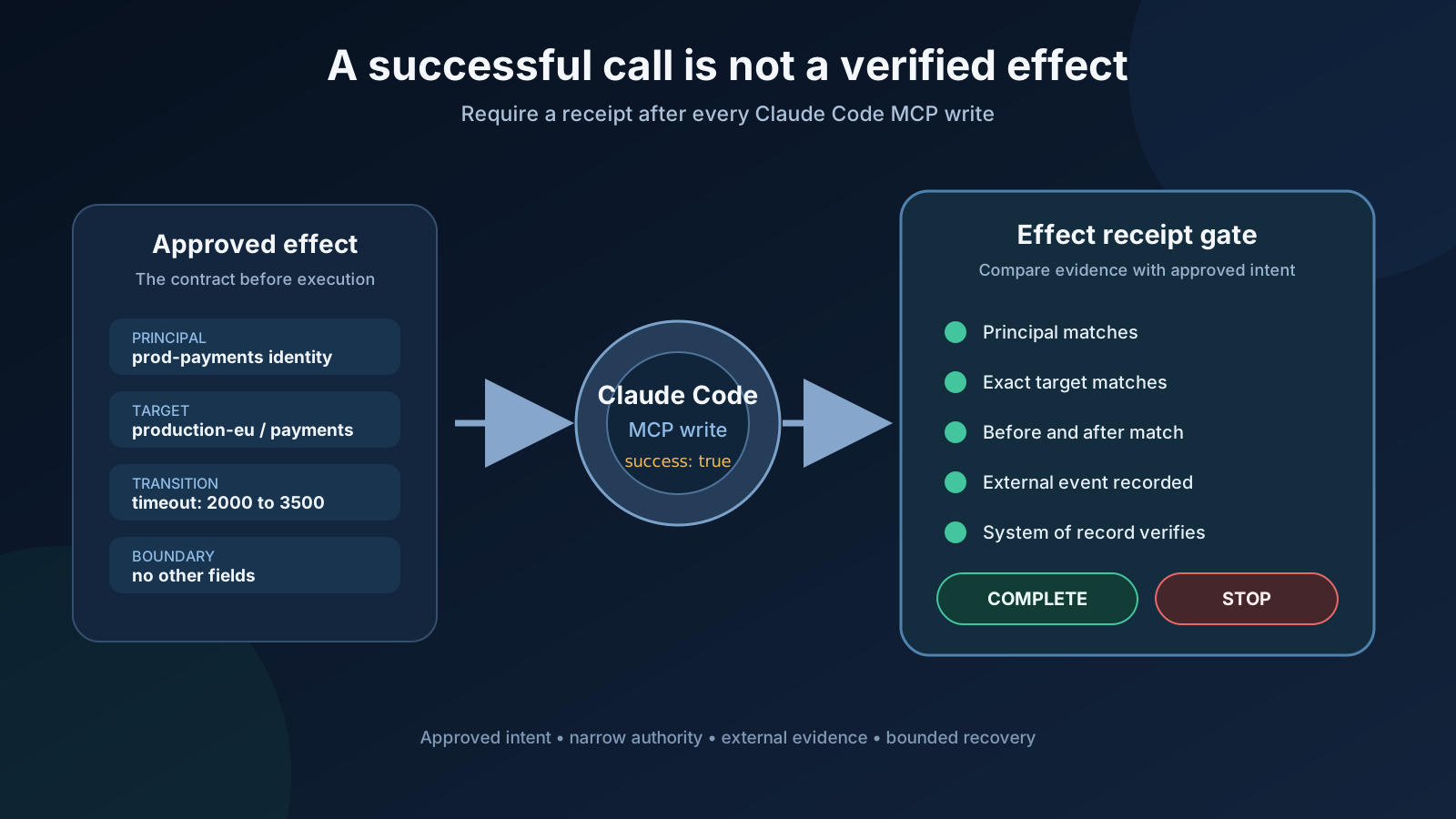
An MCP tool can return success after changing the wrong target or using the wrong authority. Make Claude Code prove the external effect before it reports completion.

Claude Code can accidentally include a developer’s unfinished edit or another agent’s output in its patch. Record the baseline, attribute every hunk, and block commits when ownership is unclear.

A Claude Code plan can become stale after another commit changes its assumptions. Bind approval to repository state and force a replan when the relevant boundary moves.

A timed-out MCP tool call may have completed after the connection closed. Verify the external result before Claude Code retries a write.