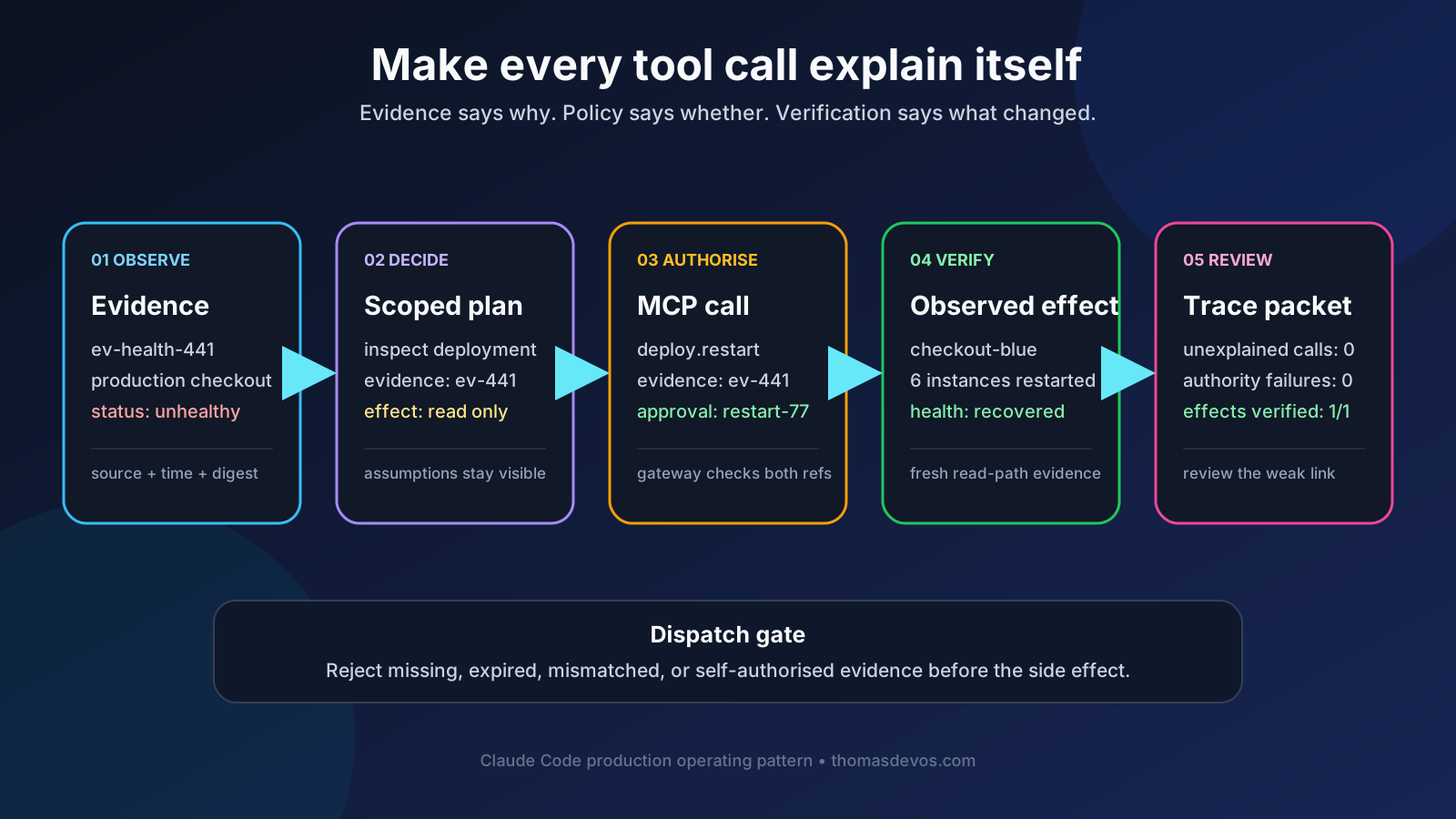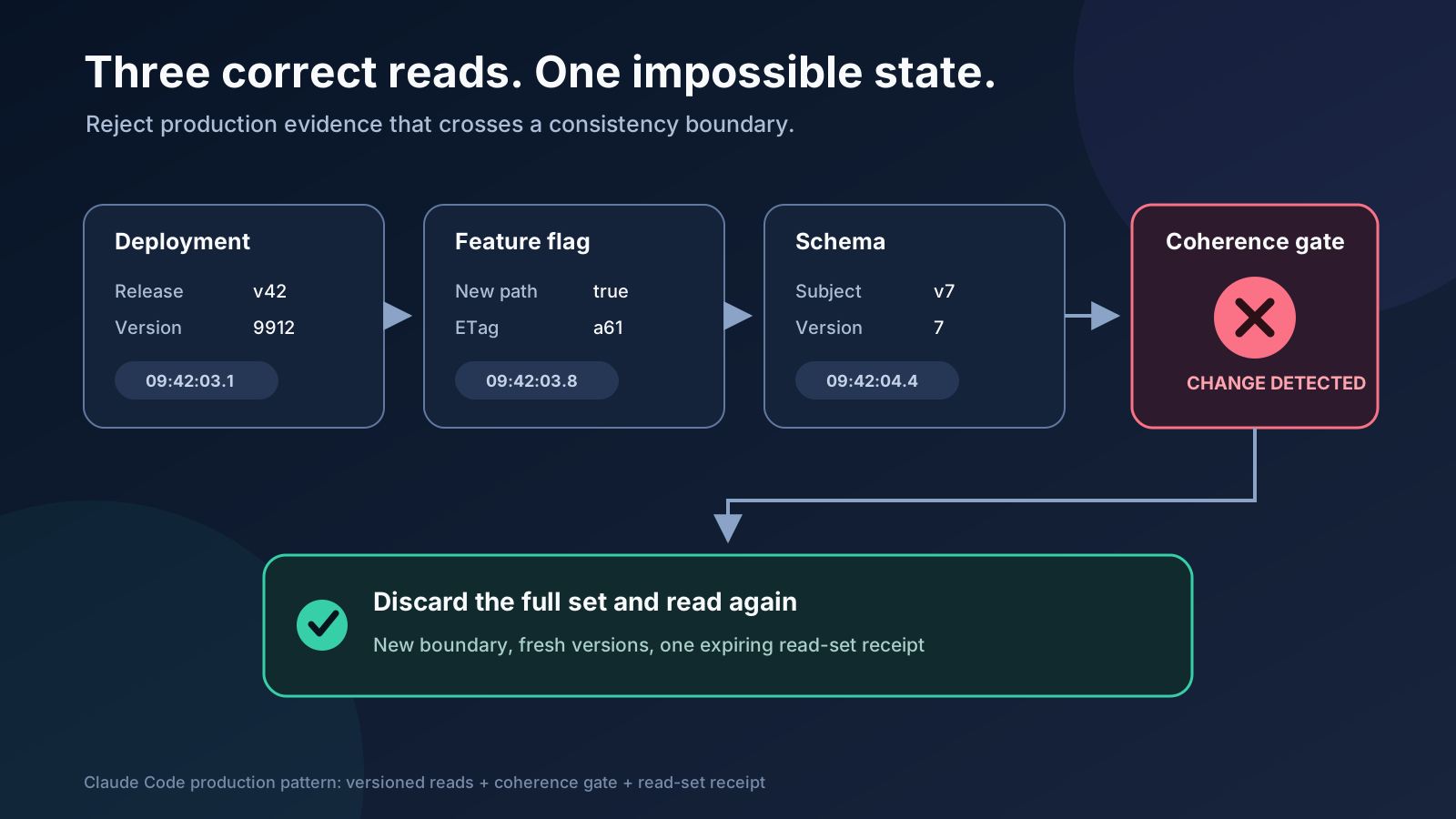
A workflow showing pilot AI agent access reviewed with evidence before it is renewed or expired

AI agent access should expire before it becomes hidden authority

Agent permissions that helped a pilot can become hidden production authority. Put expiry, renewal evidence, and removal paths around AI agents before access drifts.

July 9, 2026 · 6 min · 1141 words · Thomas De Vos
Read AI agent access should expire before it becomes hidden authority
A diagram showing the risky handoff between an AI agent demo and production use

The agent demo is not the risk. The handoff is.

AI agent demos fail quietly when teams hand them to real workflows without scope, authority, evidence, and rollback. This is where Claude Code practice and enterprise agent security meet.

July 8, 2026 · 5 min · 874 words · Thomas De Vos
Read The agent demo is not the risk. The handoff is.
A Claude Code workflow that starts with a narrow task, widens permissions, and needs a permission budget before production use

Claude Code permission drift is how safe agent workflows become unsafe

Claude Code can start with a narrow task and end up with broad tool access. Treat permission changes like production changes: log them, review them, and tie them to rollback.

July 7, 2026 · 5 min · 1053 words · Thomas De Vos
Read Claude Code permission drift is how safe agent workflows become unsafe
A production AI agent flow with request, approval, action, evidence, and revocation path

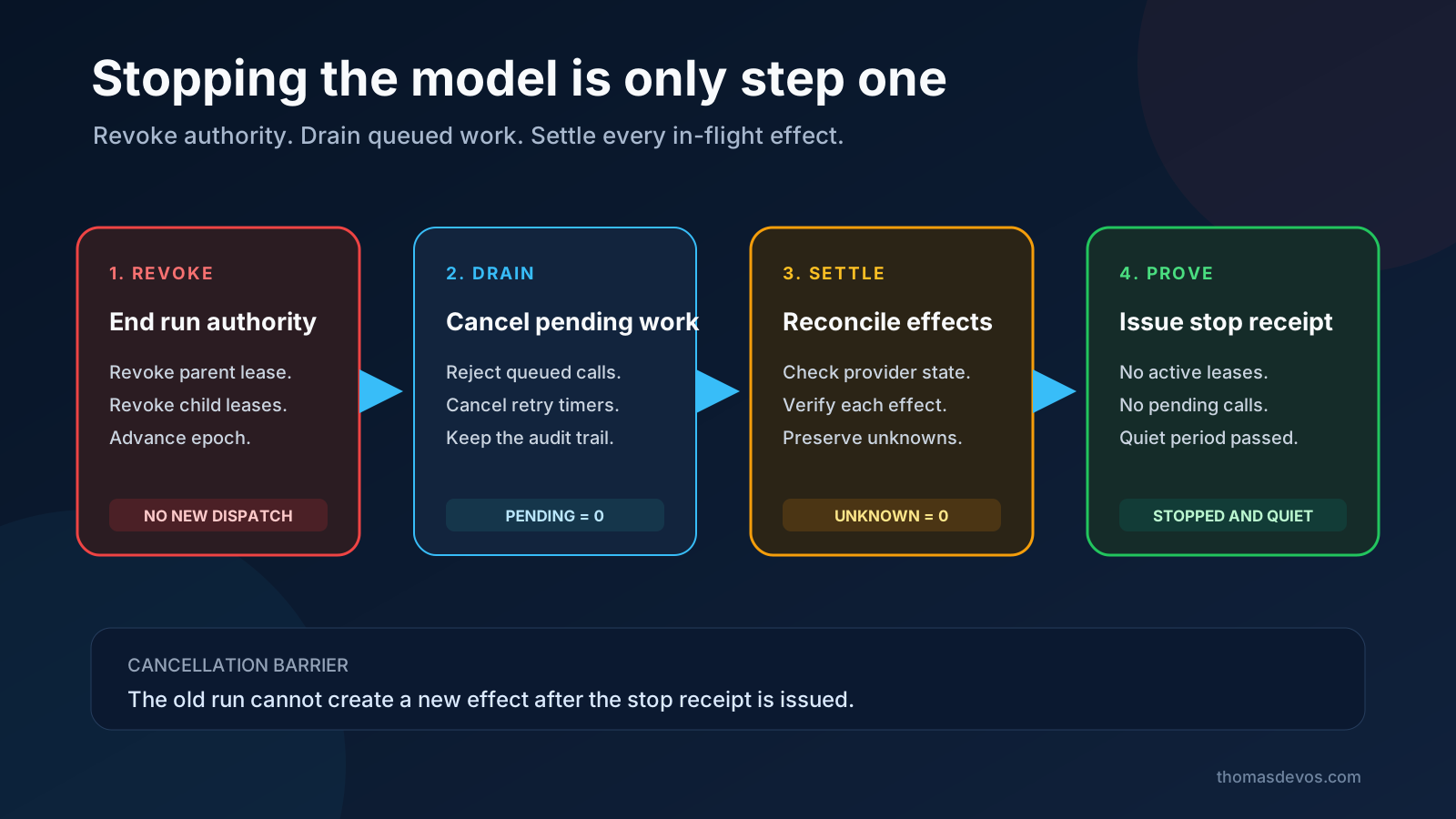
If the agent can act, it must be easy to stop

Production AI agents need a revocation path before they get wider authority. If a Claude Code run, MCP tool, workflow agent, or RAG assistant goes wrong, the team should know exactly how to stop it.

July 6, 2026 · 5 min · 880 words · Thomas De Vos
Read If the agent can act, it must be easy to stop
An agent permission change moving through proposal, review, tests, approval, rollout, and rollback

Permission changes are releases

Every new agent permission is a production change. Treat new MCP methods, data sources, write paths, credentials, and approval bypasses like releases with evidence and rollback.

July 5, 2026 · 5 min · 999 words · Thomas De Vos
Read Permission changes are releases
A bridge from a Claude Code run to an enterprise AI agent, connected by one control record

The control record is the bridge

Claude Code rollout and enterprise AI agent security need the same artifact: a control record that explains scope, authority, evidence, approval, and rollback.

July 4, 2026 · 5 min · 977 words · Thomas De Vos
Read The control record is the bridge
A production AI agent rollout flow showing scope, authority, evidence, and release controls before autonomy expands

Put agent security before the rollout

Production AI agents need scoped authority, run evidence, approval gates, and rollback before the rollout expands. This is where Claude Code delivery work and enterprise agent security meet.

July 3, 2026 · 5 min · 1012 words · Thomas De Vos
Read Put agent security before the rollout
A production AI agent evidence loop showing task contract, bounded tools, run record, approval gate, and rollback path

If the agent cannot explain the run, do not scale it

Production AI agents need more than good output. Before a team scales Claude Code or enterprise agents, the run must explain its task, tools, evidence, approval, and rollback path.

July 2, 2026 · 6 min · 1096 words · Thomas De Vos
Read If the agent cannot explain the run, do not scale it
A production Claude Code workflow showing scope, patch, tests, review, and rollback as required controls

Do not merge Claude Code work without a review packet

A clean Claude Code diff is not enough for production review. The reviewer needs the task contract, scope, commands, evidence, risks, rollback note, and approval record before merge.

July 1, 2026 · 6 min · 1170 words · Thomas De Vos
Read Do not merge Claude Code work without a review packet
A two-book production and security loop diagram showing Claude Code delivery controls and enterprise AI agent risk controls

No approval, no autonomy

If an AI agent can read internal data, call tools, change code, open tickets, or trigger workflows, it has delegated authority. Give it an approval packet before it acts.

June 30, 2026 · 6 min · 1191 words · Thomas De Vos
Read No approval, no autonomy