
Claude Code permission drift is how safe agent workflows become unsafe
Claude Code can start with a narrow task and end up with broad tool access. Treat permission changes like production changes: log them, review them, and tie them to rollback.
Topic archive
89 essays tagged MCP. Practical notes on what happens after the demo: prompts, tools, review packets, evals, rollback, and production ownership.
Claude Code can start with a narrow task and end up with broad tool access. Treat permission changes like production changes: log them, review them, and tie them to rollback.
The hardest CCAR-F distractors are often almost right. Learn to spot the architectural boundary they quietly cross.

Production AI agents need a revocation path before they get wider authority. If a Claude Code run, MCP tool, workflow agent, or RAG assistant goes wrong, the team should know exactly how to stop it.

Every new agent permission is a production change. Treat new MCP methods, data sources, write paths, credentials, and approval bypasses like releases with evidence and rollback.

Claude Code rollout and enterprise AI agent security need the same artifact: a control record that explains scope, authority, evidence, approval, and rollback.

Production AI agents need scoped authority, run evidence, approval gates, and rollback before the rollout expands. This is where Claude Code delivery work and enterprise agent security meet.

Production AI agents need more than good output. Before a team scales Claude Code or enterprise agents, the run must explain its task, tools, evidence, approval, and rollback path.
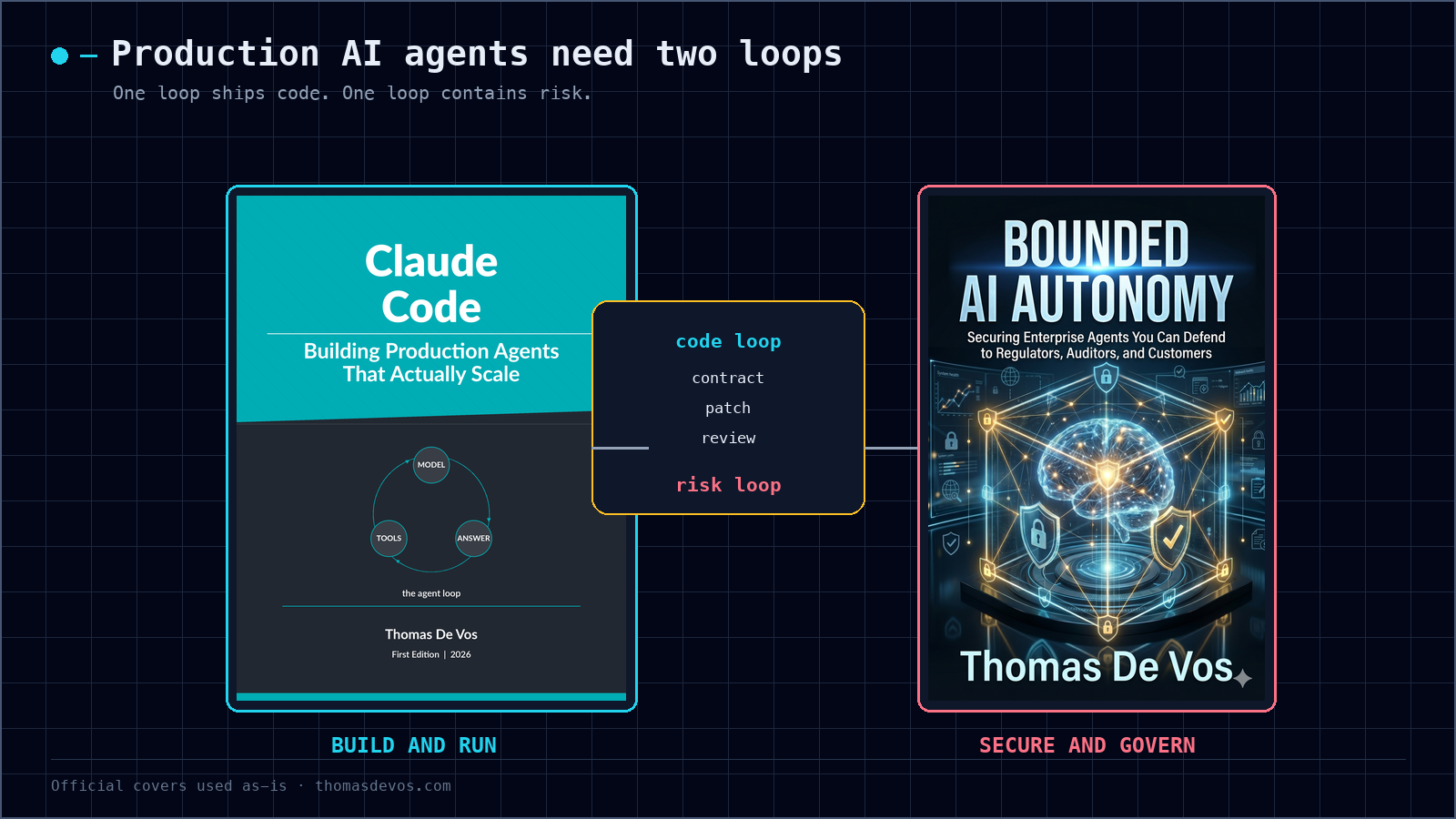
If an AI agent can read internal data, call tools, change code, open tickets, or trigger workflows, it has delegated authority. Give it an approval packet before it acts.

A production AI agent is only as good as the control plane around it: scope, identity, tool boundaries, evals, observability, approvals, and rollback. Better prompts do not replace that operating model.

An agent’s preview is useful only if the boundary prevents writes. Review the proposed actions, then test the permissions behind the preview.