A control map showing security questions for a Claude Code rollout: authority, boundaries, evidence, and risk ownership

What security should ask before a Claude Code rollout

Before Claude Code becomes a team habit, security should ask about authority, boundaries, evidence, rollback, and ownership. These questions turn agentic coding from a demo into a reviewable operating model.

June 7, 2026 · 7 min · 1489 words · Thomas De Vos
Read What security should ask before a Claude Code rollout
A Claude Code permission workflow where request, grant, and evidence lead to automatic expiry

Claude Code permissions need expiry dates

Claude Code permissions are safest when they are temporary. Treat every extra file, command, MCP tool, and network path as a task-scoped grant that must expire unless a human renews it with evidence.

May 26, 2026 · 6 min · 1134 words · Thomas De Vos
Read Claude Code permissions need expiry dates
A Claude Code flight recorder diagram with task contract, tool calls, evidence, review, and rollback

Claude Code needs a flight recorder

Claude Code can produce a clean patch from a messy run. Production teams need a flight recorder: the task contract, tool calls, permission pressure, tests, assumptions, and rollback notes that explain how the patch was made.

May 23, 2026 · 5 min · 1005 words · Thomas De Vos
Read Claude Code needs a flight recorder
A Claude Code permission boundary diagram showing allowed tools, a closed gate for risky tools, review, and rollback

Claude Code permissions should fail closed

Claude Code permissions are where agent safety becomes concrete. If a run needs production data, billing config, deploy access, or a wider MCP tool, the default should be stop, explain, and wait for a human decision.

May 22, 2026 · 6 min · 1078 words · Thomas De Vos
Read Claude Code permissions should fail closed
Diagram showing Claude Code MCP blast radius controls with allowed tools, write scope, audit trail, and approval gate

Claude Code MCP tools need a blast radius

MCP tools make Claude Code far more useful, but broad access turns a weak prompt into a production risk. Treat every tool as blast radius, not convenience.

May 18, 2026 · 7 min · 1361 words · Thomas De Vos
Read Claude Code MCP tools need a blast radius
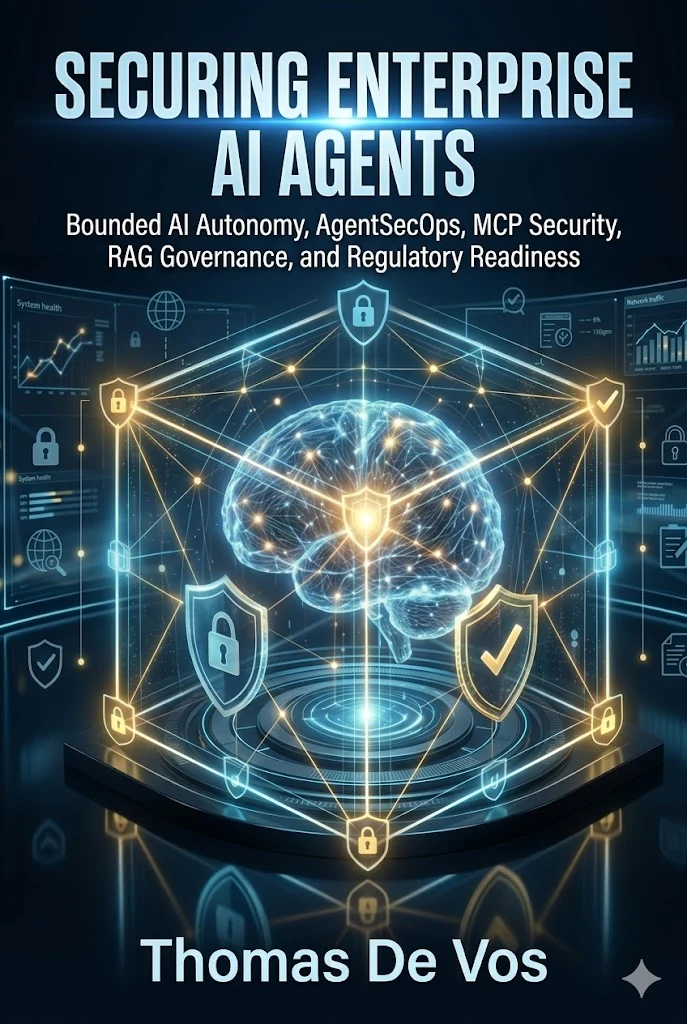
Cover of Securing Enterprise AI Agents by Thomas De Vos

Securing Enterprise AI Agents is live

I published Securing Enterprise AI Agents, a practical book on bounded AI autonomy, AgentSecOps, MCP security, RAG governance, identity, evals, policy, and evidence.

May 15, 2026 · 3 min · 466 words · Thomas De Vos
Read Securing Enterprise AI Agents is live
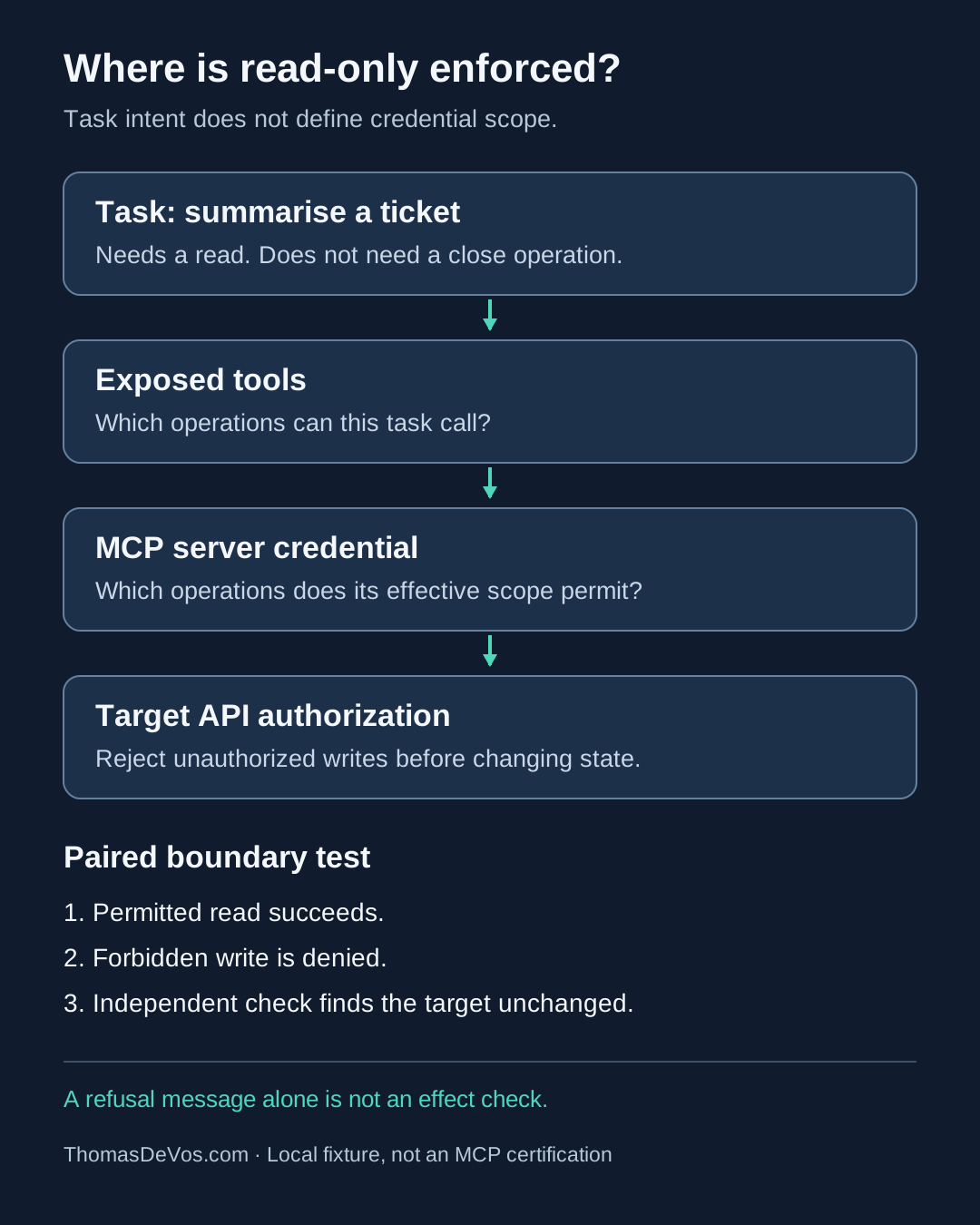
A ticket-summary task passes through exposed tools, MCP credential scope and target authorization. Check a permitted read, denied write and unchanged target.

Claude Code permissions: test the read-only boundary

A ticket-summary task needs read access. Test whether tool exposure and credential scope actually prevent writes, with an executable fixture and a review record.

May 15, 2026 · 9 min · 1737 words · Thomas De Vos
Read Claude Code permissions: test the read-only boundary
Diagram showing how MCP tools widen Claude Code blast radius from local repository access to external systems unless boundaries, approval, logs, and rollback are added

Claude Code MCP tools need a blast radius, not a vibe check

MCP makes Claude Code more useful, but every server also widens the blast radius. Treat MCP tools as production access paths with allowlists, approval gates, call logs, and rollback notes.

May 5, 2026 · 7 min · 1310 words · Thomas De Vos
Read Claude Code MCP tools need a blast radius, not a vibe check
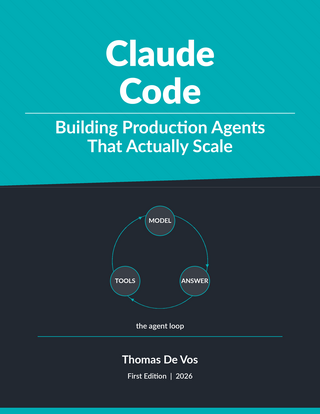
Cover of Claude Code: Building Production Agents That Actually Scale by Thomas De Vos

Claude Code book is live on Amazon Kindle

Claude Code: Building Production Agents That Actually Scale is now live on Amazon Kindle. Here is who it is for and why I wrote it.

May 3, 2026 · 2 min · 369 words · Thomas De Vos
Read Claude Code book is live on Amazon Kindle