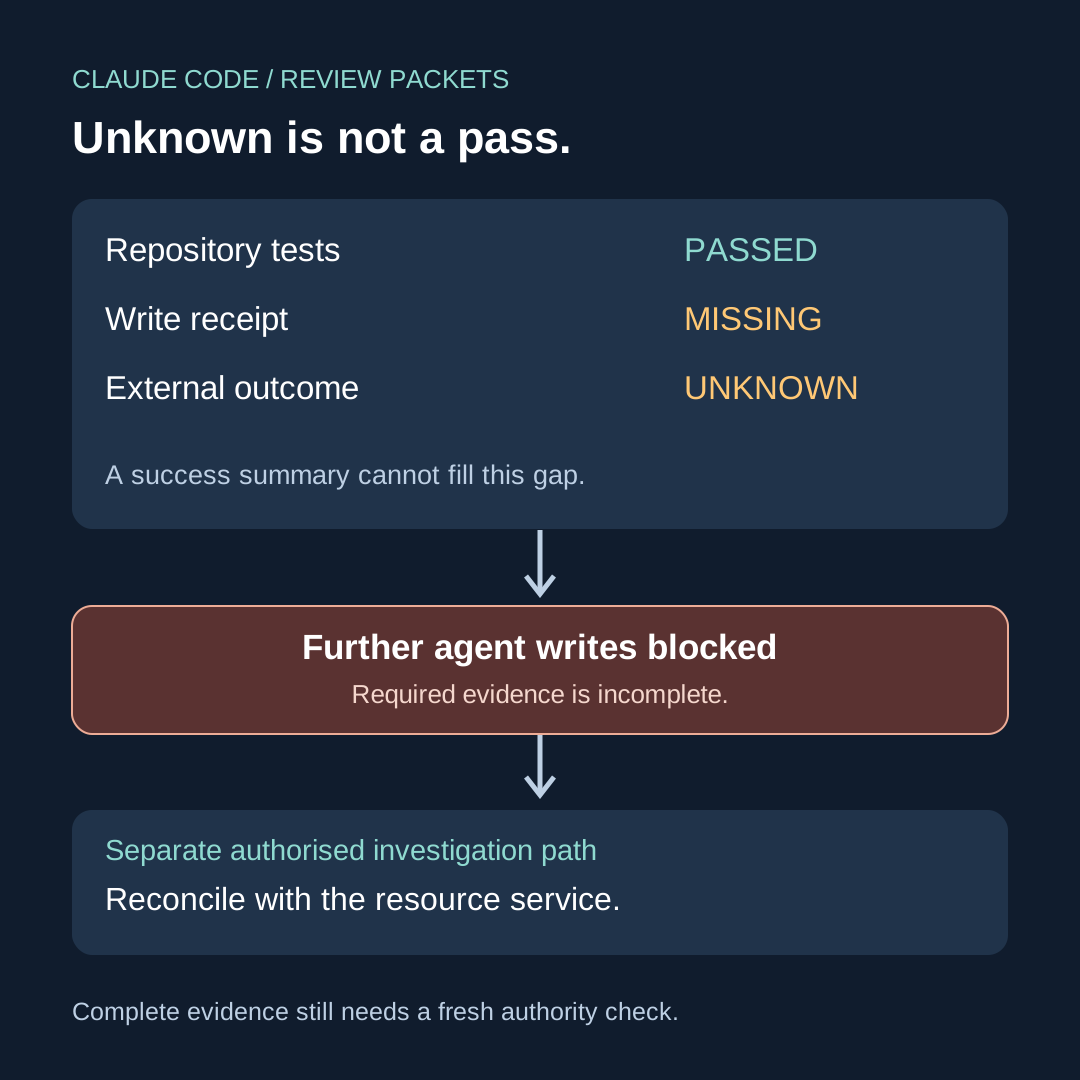
Claude Code review packets: unknown is not a pass
Passing tests cannot settle a missing MCP write receipt. Give unresolved effects a status that the approval gate cannot ignore.
Topic archive
36 essays tagged Observability. Practical notes on what happens after the demo: prompts, tools, review packets, evals, rollback, and production ownership.
Passing tests cannot settle a missing MCP write receipt. Give unresolved effects a status that the approval gate cannot ignore.
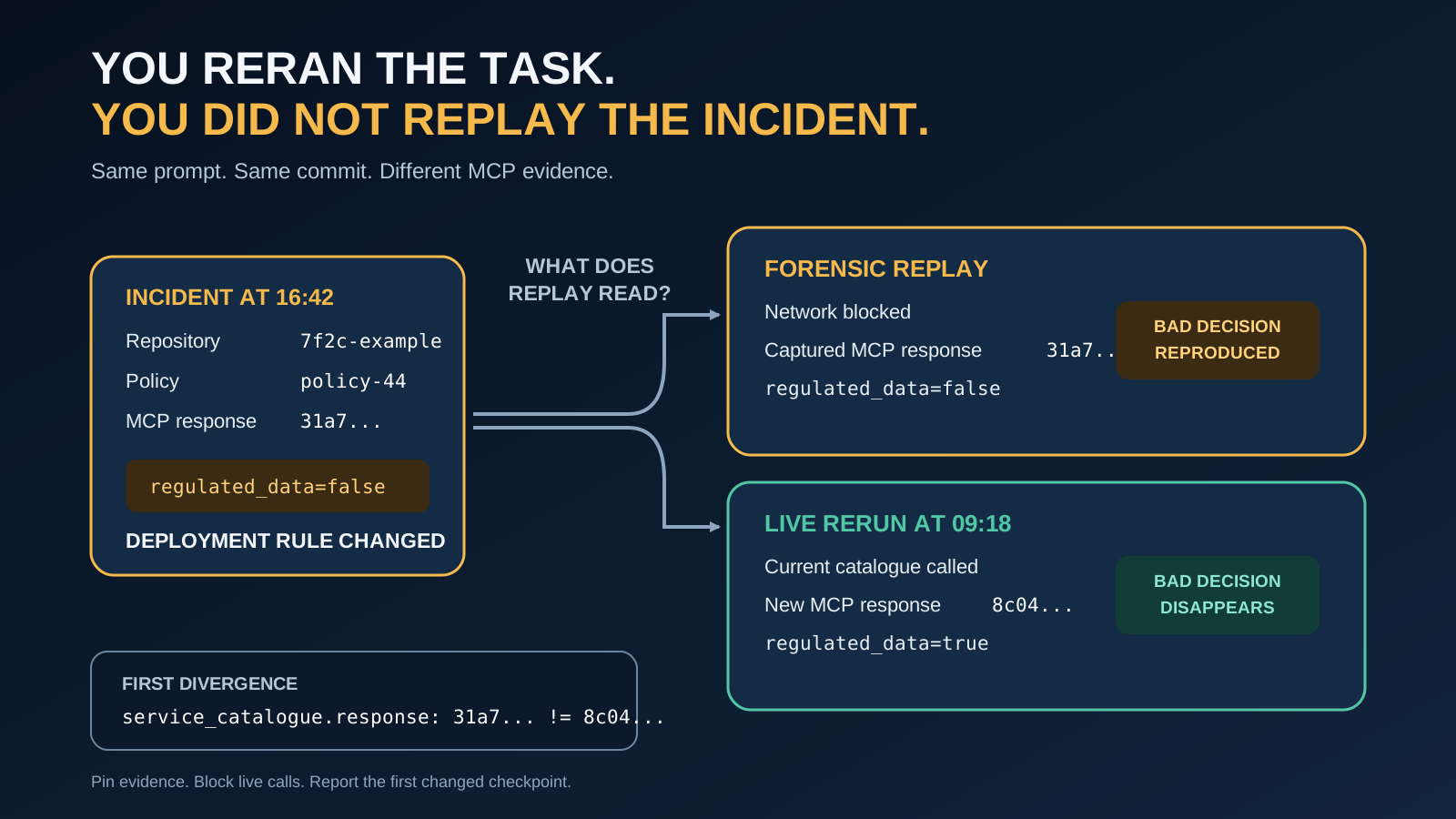
The same prompt and repository commit produced a clean replay because an MCP tool returned newer evidence. The team had rerun the task, not reproduced the incident.

A permitted CI retry reached production through an artifact event and a more powerful release service. Tool permissions missed the effect that mattered.
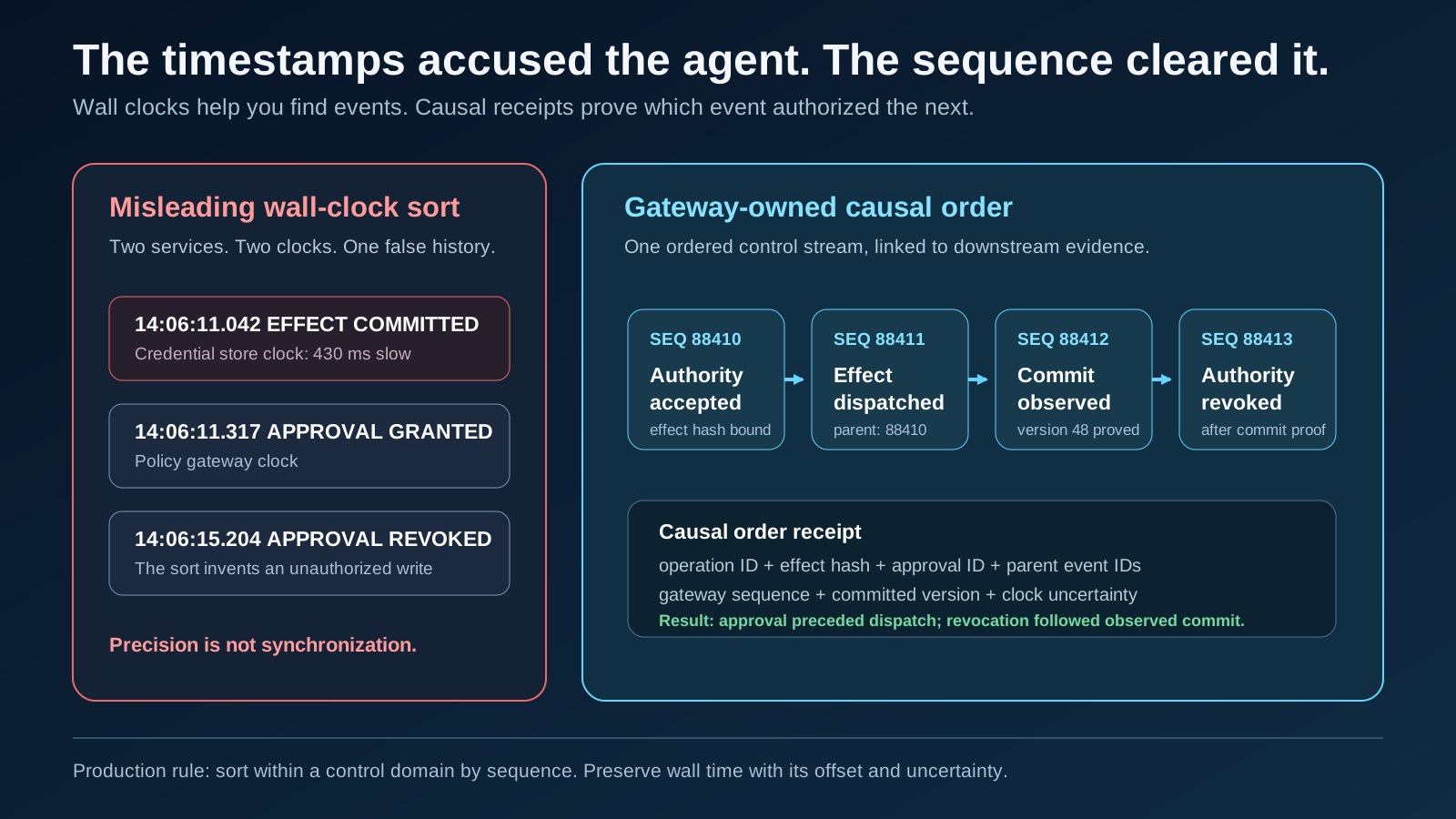
Clock skew made an approved Claude Code run look unauthorized. Wall-clock timestamps cannot prove the order of a production agent’s approval, dispatch, commit, and revocation.
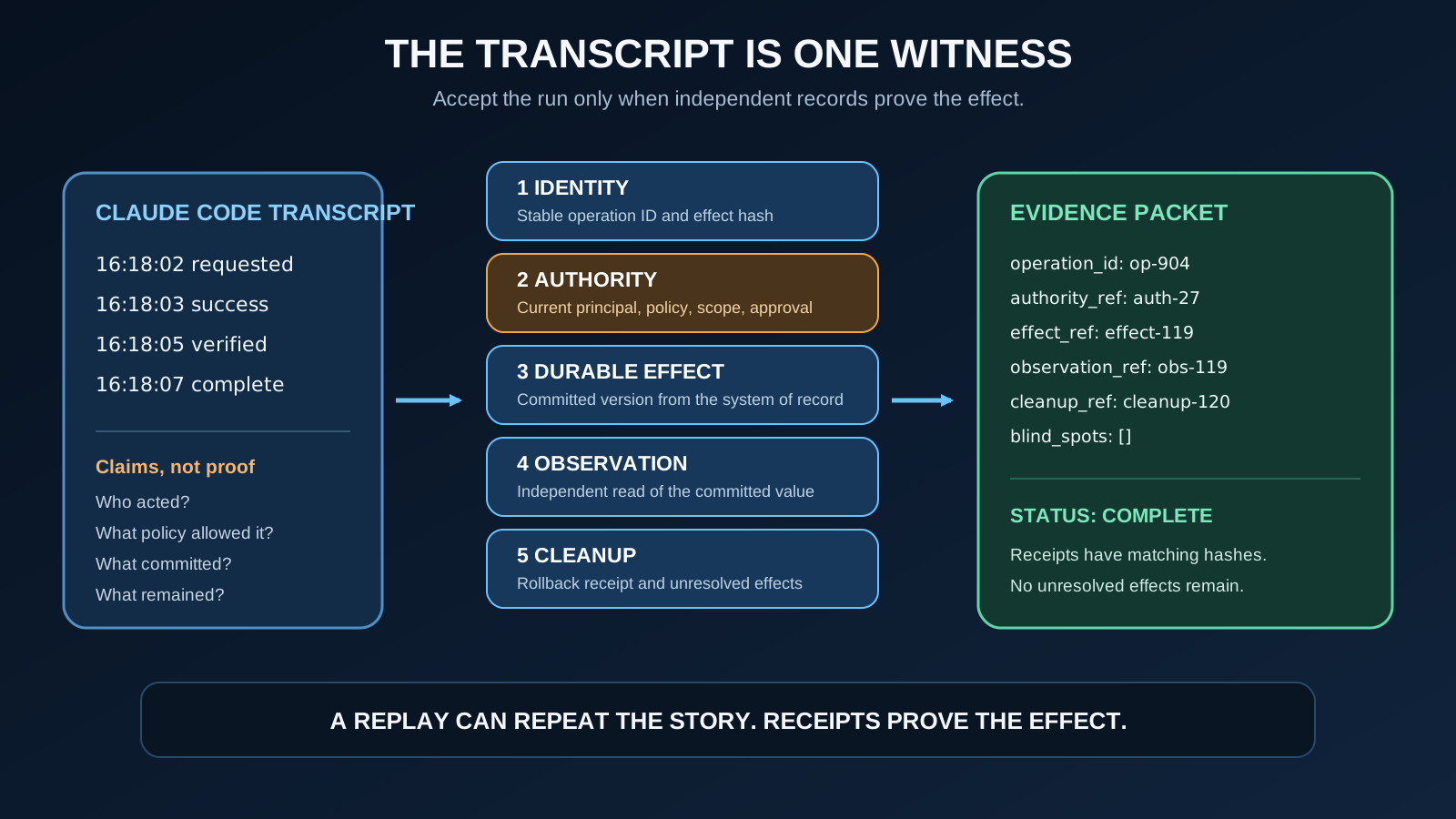
A Claude Code transcript can describe an MCP action without proving who was authorized, what committed, whether an independent read saw it, or what rollback left behind.
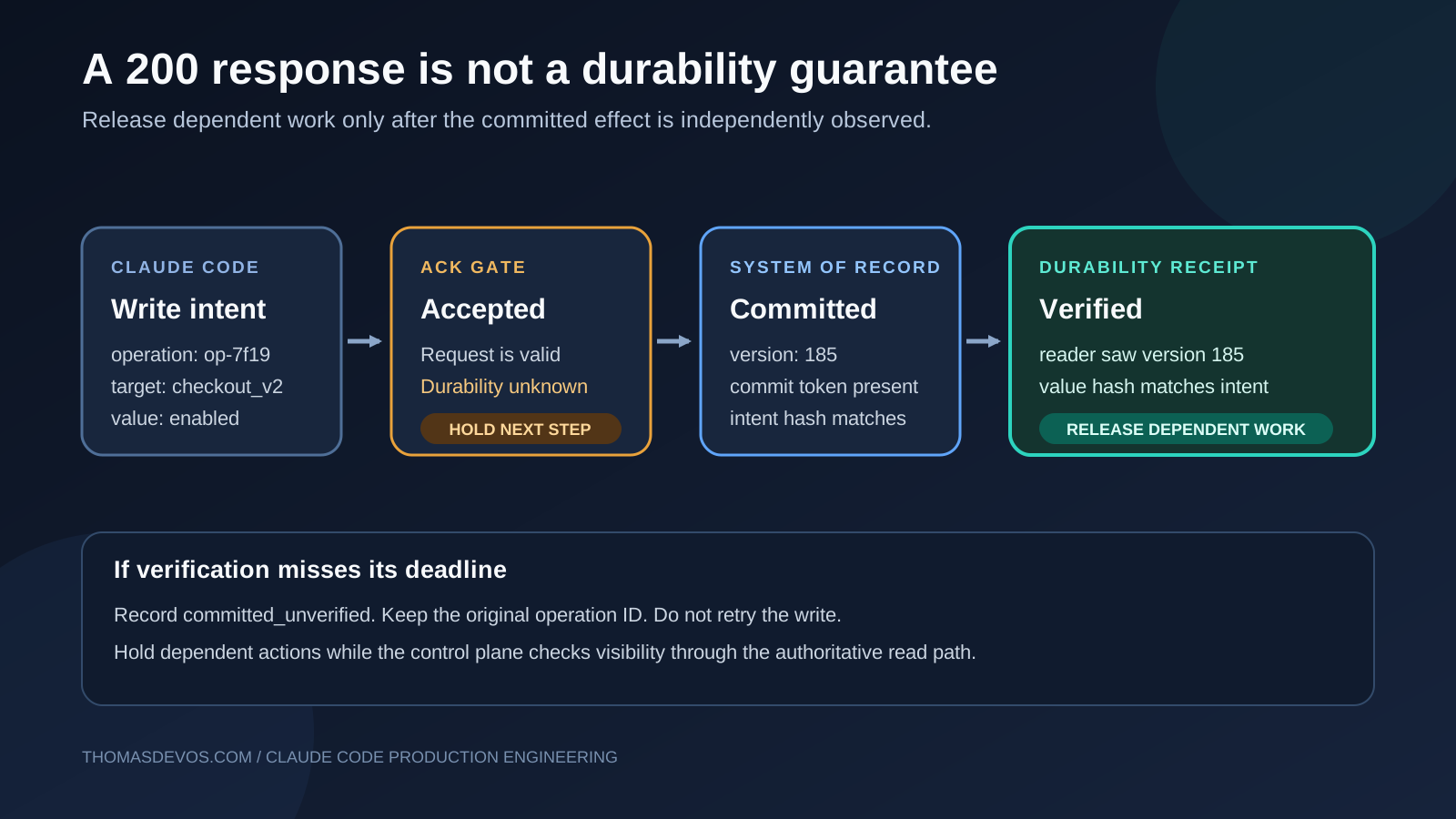
An MCP tool can return success after accepting a write but before durable storage. Define acknowledgement levels, verify the committed version, and give Claude Code a durability receipt.
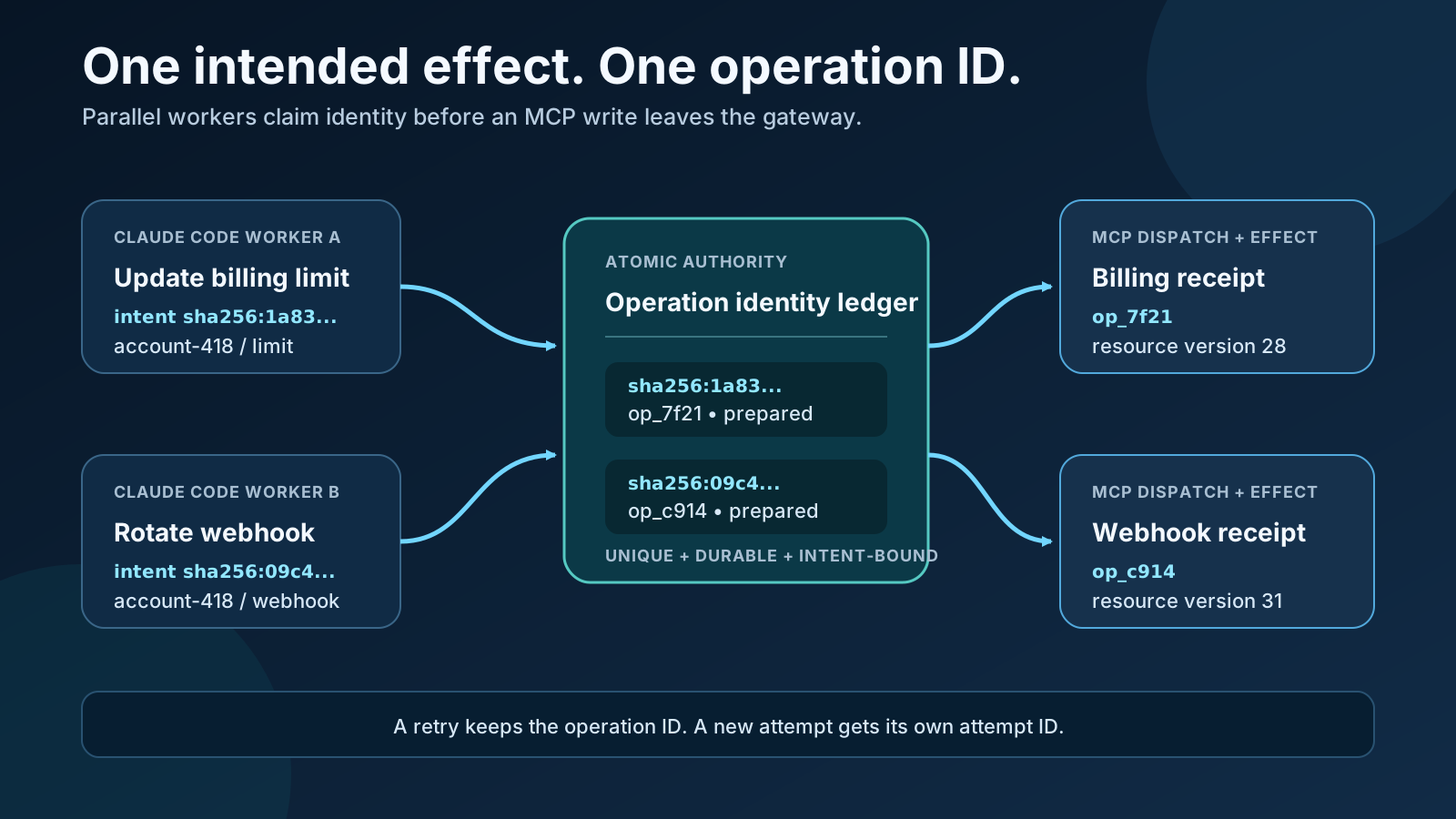
Two parallel Claude Code tool calls can share an operation ID and corrupt retry evidence. Allocate identity centrally, bind it to intent, and reject collisions before dispatch.
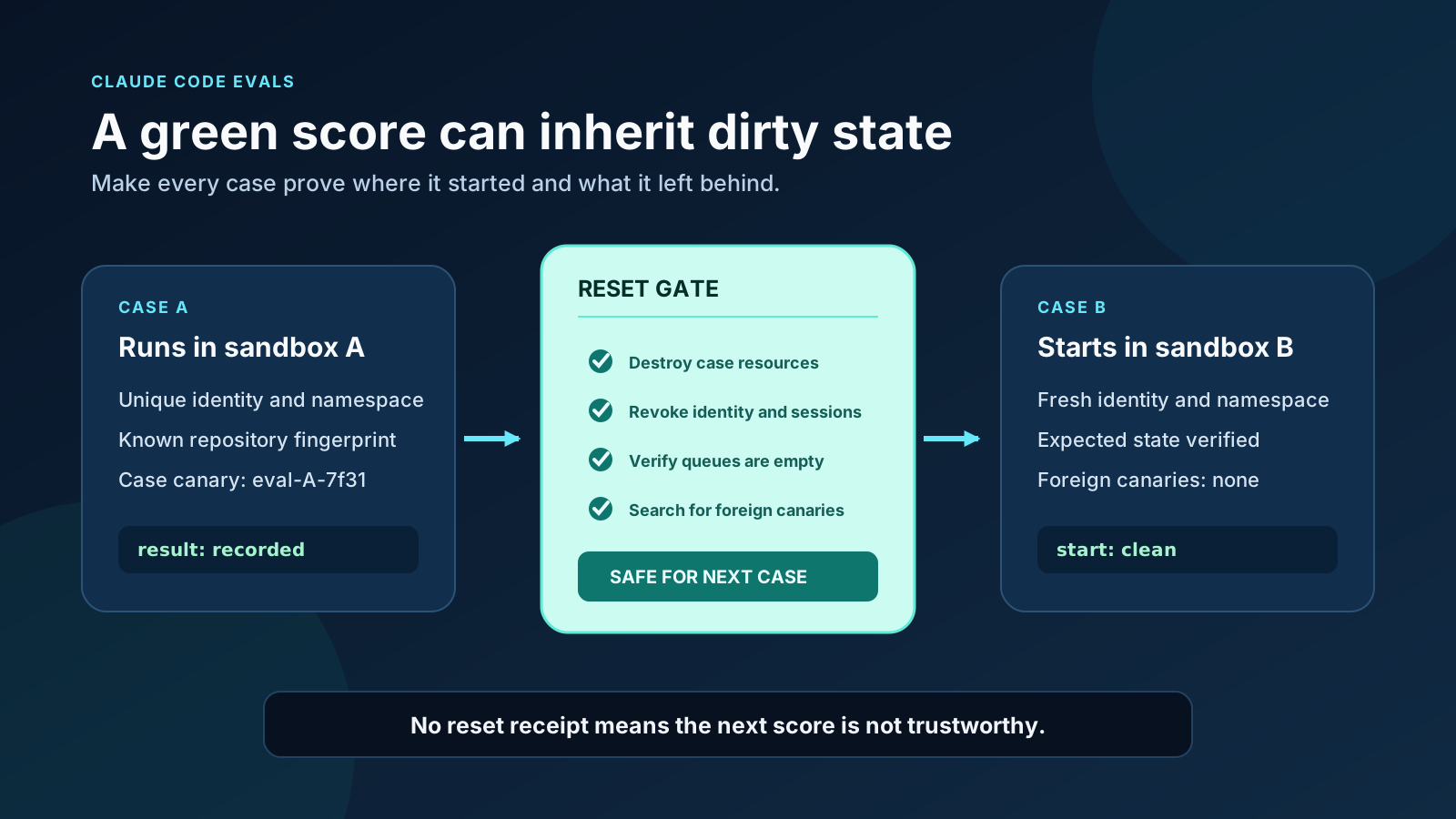
A Claude Code eval can pass only because an earlier case left the sandbox in a helpful state. Give every case a fresh environment, a state fingerprint, and a reset receipt.
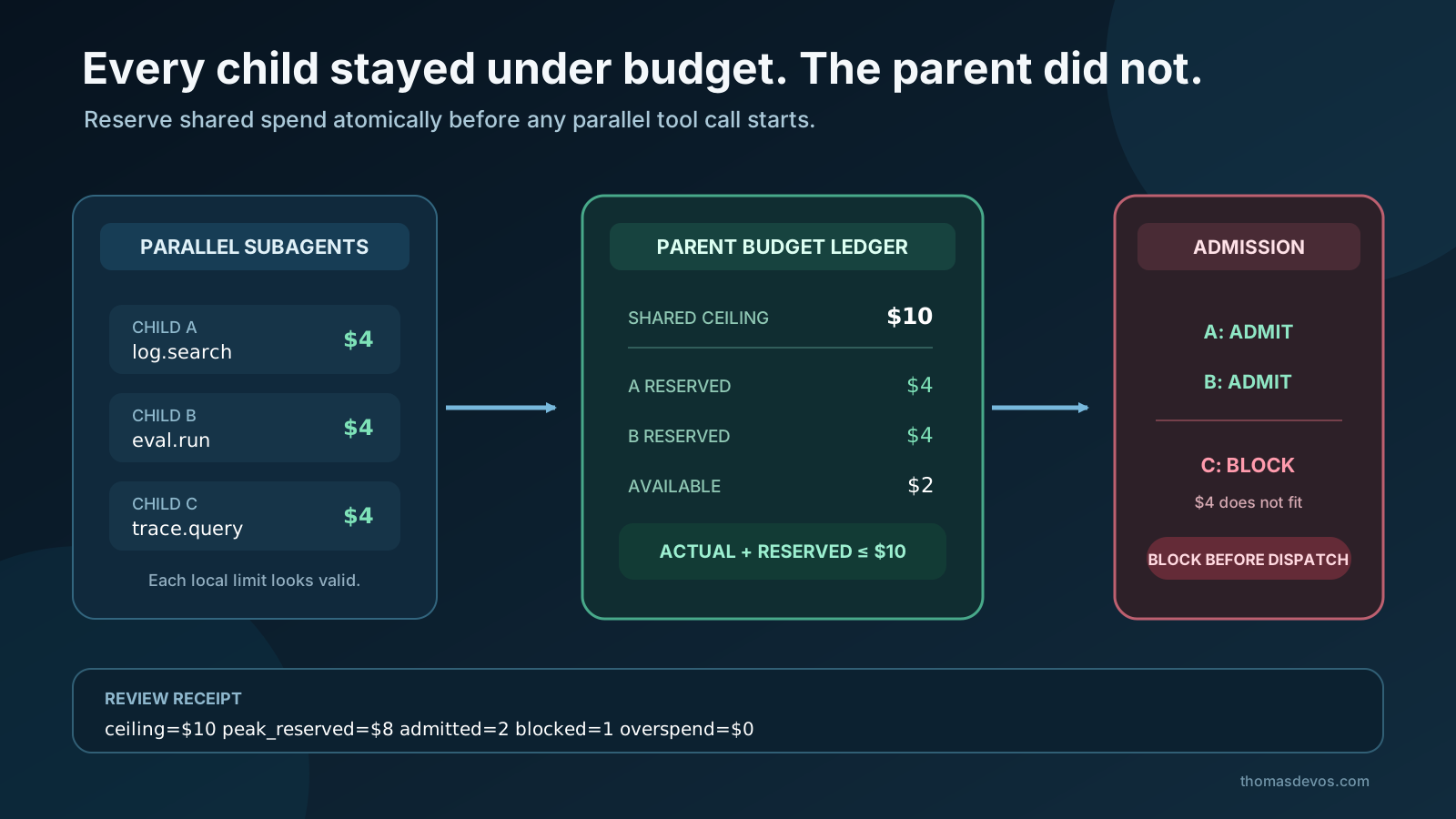
Three Claude Code subagents each stayed inside their local limit. Together they broke the run budget because nobody reserved spend at the parent boundary.
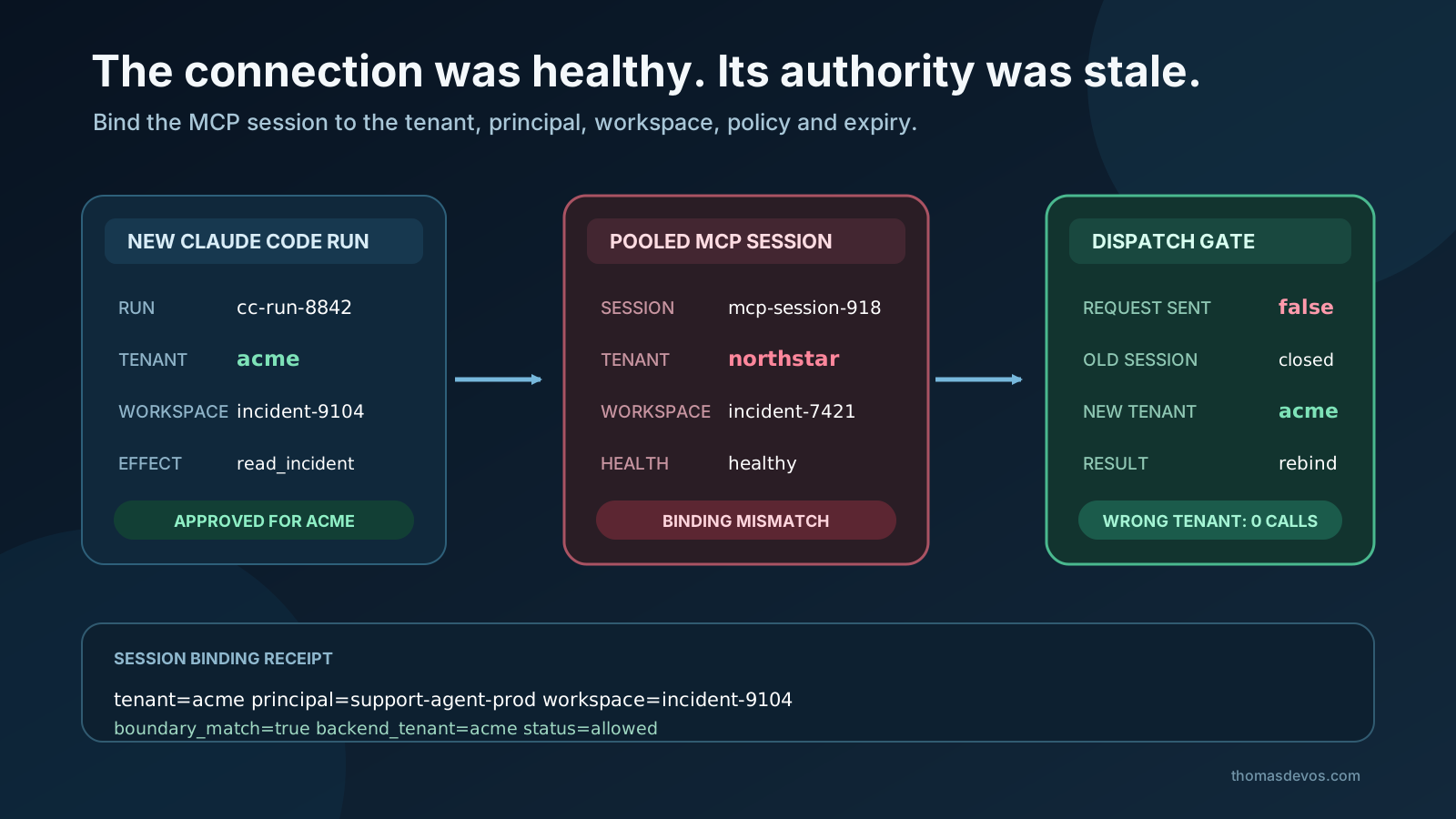
A new Claude Code run selected the right tenant, but its pooled MCP session kept the previous tenant context. Bind every session to the authority it carries.